
August 5, 2025 · 7 min read
Black Streaks on Your Roof: Causes & Safe Removal
If you have ever looked up at your own roof and noticed those long, dark, vertical streaks running down the shingles, you are not alone. Roughly 80% of asphalt-shingled homes in the United States show some degree of black streaking — and most homeowners assume it is dirt, soot, or moisture. It is not. Those streaks are a living organism called gloeocapsa magma, and it is slowly eating your roof.
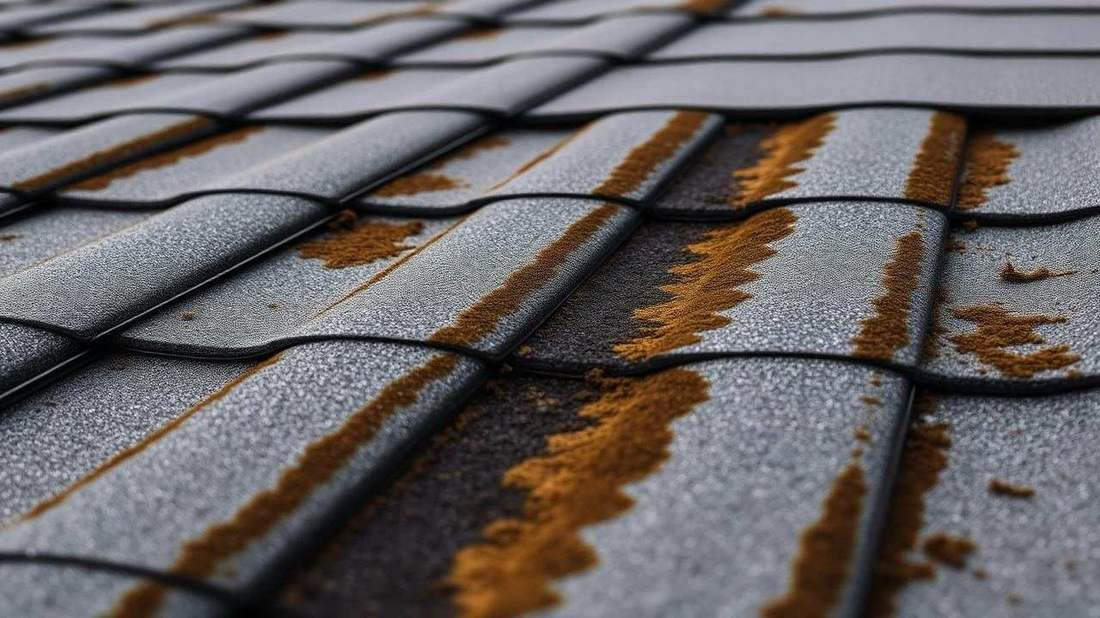
What is Gloeocapsa Magma?
Gloeocapsa magma is a species of blue-green algae (more properly, cyanobacteria) that thrives in warm, humid environments and feeds on the limestone filler used in modern asphalt shingles. The algae cells reproduce, accumulate, and develop a dark protective layer to shield themselves from UV. That dark layer is what we see as a black streak. The streaks always run vertically because the algae is being washed downhill by every rainfall, leaving a trail of organism behind.
Why It Matters
Gloeocapsa magma is not cosmetic. It actively shortens the life of the roof in three measurable ways. First, it eats the limestone filler in the shingle, weakening the structural integrity over time. Second, the dark layer absorbs heat, raising attic temperatures by as much as 10°F and increasing cooling costs. Third, every major shingle manufacturer (GAF, Owens Corning, CertainTeed) recognizes algae growth as a covered defect and will void warranty coverage if the roof has not been maintained per their guidelines — guidelines that explicitly require soft washing, never high-pressure cleaning.
Why You Cannot Just Pressure Wash It Off
This is the single most expensive mistake homeowners make. Pressure washing an asphalt shingle roof — even at moderate PSI — strips the protective granules off the shingle surface. Once the granules are gone, the underlying asphalt is exposed to UV, the shingle ages dramatically faster, and the roof's life can be cut in half. The Asphalt Roofing Manufacturers Association (ARMA) explicitly prohibits pressure washing of asphalt shingles. Any contractor who proposes pressure washing your roof should be politely shown the door.
The ARMA-Approved Removal Method
The correct method is a soft wash. A low-pressure pump applies a solution of sodium hypochlorite, water, and a surfactant package to the shingles. The solution dwells for 15–20 minutes, killing the algae at the cellular level. The roof is then rinsed with a soft, high-volume rinse — never high pressure — and the algae literally washes off. The streaks are gone the same day, and properly applied solution prevents re-growth for 4–7 years.
Step-by-Step: What a Professional Soft Wash Looks Like
- Pre-wet all landscaping and pre-saturate surrounding plants to dilute any over-spray.
- Tarp and bag any vulnerable plantings under the eaves.
- Apply the soft-wash solution at low pressure from the gutter line down to the ridge.
- Allow 15–20 minutes of dwell time for the chemistry to penetrate and kill the algae.
- Rinse from the ridge down with a high-volume, low-pressure soft rinse.
- Final landscaping rinse and pH check at the foundation to neutralize any runoff.
Preventing Re-Growth
After the cleaning, install zinc or copper strips at the ridge of the roof. When it rains, ions wash off the strips and continuously inhibit algae regrowth on the slopes below. Zinc strips are inexpensive, easy to install, and dramatically extend the time between cleanings. Many manufacturers also now offer algae-resistant shingles for replacement roofs — these come with a 10-year algae warranty built in.
What It Costs
Most residential soft-wash roof cleanings fall between $399 and $899, depending on roof square footage, pitch, and access. Zinc strips add $99–$249 installed. A 5-year maintenance plan with annual treatment can bring per-year cost below $200. Compare that to the cost of premature roof replacement — typically $10,000–$25,000 — and the math is simple.
Common Questions Homeowners Ask
Will the soft wash damage my landscaping?
No, when applied correctly. Reputable contractors pre-saturate and continuously rinse plants. The chemistry is biodegradable and breaks down quickly once diluted.
How long does the job take?
Most single-family roofs are cleaned in 2–4 hours. You don't need to be home, but plants near the eaves benefit from a final manual rinse you can do yourself the next morning.
The Bottom Line
Those black streaks are a slow but certain warning sign. The cost of removal is a small fraction of the cost of premature roof replacement, and the longer you wait, the deeper the algae penetrates. Call AquaShine at (626) 618-8360 for a free roof inspection and a flat-rate soft-wash quote. We never pressure wash a shingle roof, and we guarantee the result.